
After being fed a trillion-gazillion bytes of previous human blood, sweat, and tears involved in artwork or literature, Artificial Intelligence is becoming/has begun to be judged capable of original production. Professionally speaking, that sounds more reasonable than a million (or 10 million?) chimpanzees on keyboards knocking out even a couple verses of Bill Shakespeare-worthy prose by accident.
At the current time, I’m a way better writing alternative
Without going deeply into whether its a good idea or not, the AI future has been coming almost 70 years, and the chimps haven’t produced anything noteworthy. Read on LinkedIn about AI knowing how to make hiring decisions though, that’s not a belief I get on board with.
Having a ‘presence’ – something that results in a tah dah! magic button for a potential user of my talents – HAS to be better, because its worked that way before. Sites still don’t recognize MSOffice includes Word, or journalism as somehow lacking ‘media and communications,’ or Writing as splintered possibilities – I note seven on my business card.
AI Hiring and SUITS
Could the Zen of Harvey Specter and Mike Ross coming together on the basis of – well, a busted drug deal – and Mike’s statistical memory out-dueling Harvey’s ego on trivia happen with AI? I think not.
Far above the vast area between accidental genius and synthesized, analytical material becoming heart-breaking romance, discovering the answer to someone’s pain about any number of factors is what INTERVIEWING is about, and where writers of all stripes wear the sales hat.
Sports writing v. content creation
Sports have their own voice, and quotes are usually the most compelling part. Of course there are the numbers, stats, win-loss conclusions, and opinions of moments in the result. If we have or haven’t seen the event, can you appreciate how a journalist presents it, accurately and colorfully?
That’s part of what interviewing does for ‘client voice.’ Putting them together, with the proliferation of websites and blogs that require on-going production, is what long-form informational blogging has become. Although not as direct as words from a winning coach, corporate voice is THE voice.
From high school journalism on, the need to set the hook with readers in the first paragraph was considered paramount. Now its the click value of the headline, because people scan vs. read.
Relative to value, while Charlotte pays writing persons above the national rates (as reported by Indeed, Glassdoor, Payscale), the job title-category is usually a primary determinant.
Copy writers at $26.38/hr, content writers, and writers generally are close to $50k (Payscale says $47k is 10% above national avg., Glassdoor pegs avg. @ $55k), while content creation, including editors and social media types, are only in the middle-upper teens per hour. Indeed puts these North Carolina rates at 15% below national averages.
Of course there are ranges. ‘Freelancers’ is a relative term ($22.46/hr., Payscale), tutors average $23/hr. (I usually bill at $30) and technical writers lead the overall pack at $32/hour. While descriptions for all have terms in common (white papers, blogs, SEO), writers seem to involve more interfacing with other creatives. Content creation is often list-cicles or amalgamated research and rehashing as a group effort, with the focus on Google positioning.
*Everyone* wants copy/blogs/thought leadership that ‘meets and exceeds customer expectations.’
Technical Writing
Thought Leadership style has become a strong part of long-form informational blogging via social media. Contrasting previous projects with a sketchy client description highlights the importance of interviewing.
According to a Thumbtack lead, the client had an ESL (English Second Language) situation, and to his credit, knew he needed additional expertise to make business proposals ‘read righter.’
In hearing the project was between 2,000-10,000 words represented an awful lot of territory to consider overall pricing. My blogs are often 1200-1800+ words, saying 10,000 was a lot, a concrete example of both parties understanding what a project entails. Whether this business plan was going to include enough budget for technical writing was also a consideration.
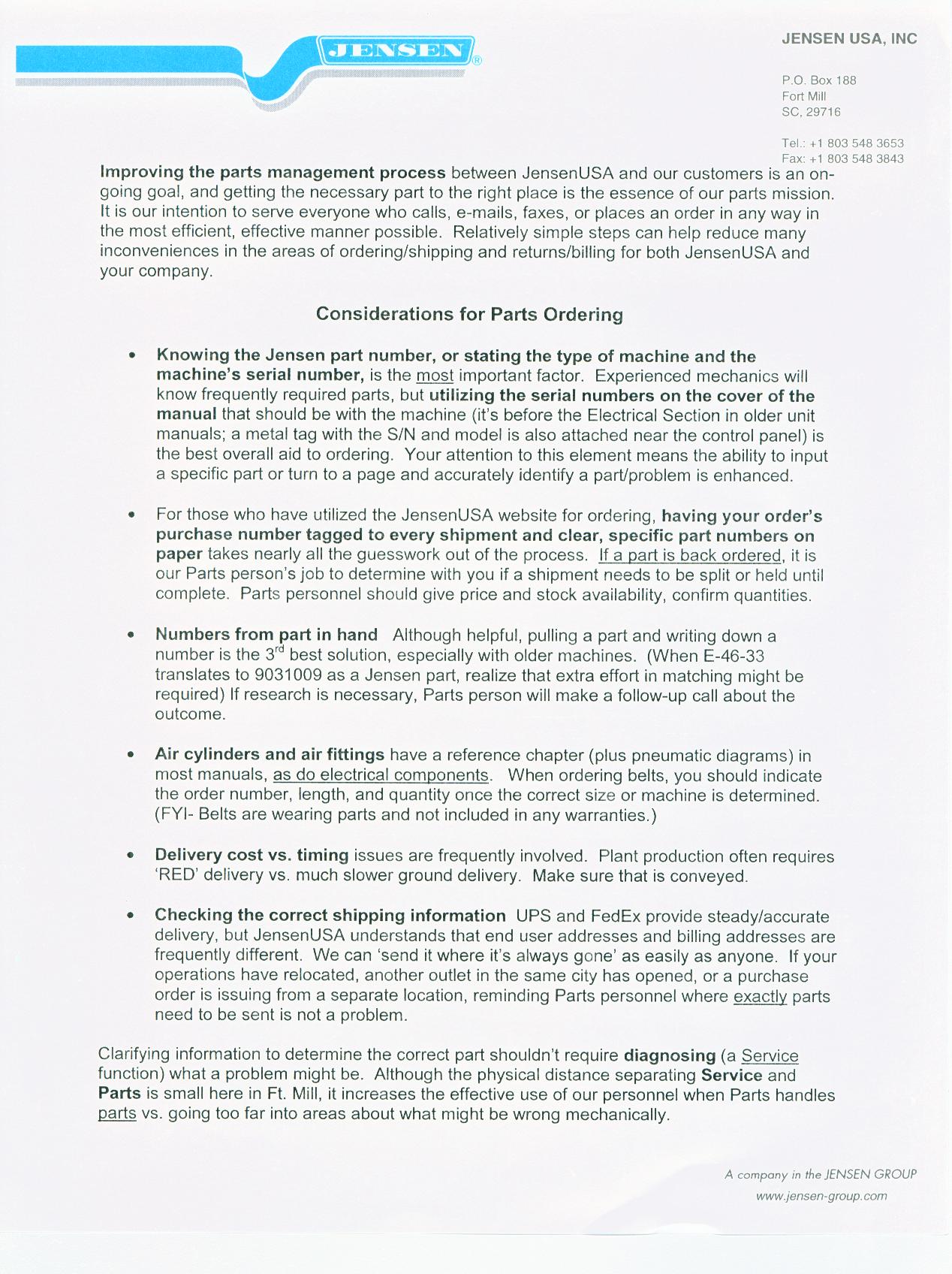
Parts Management Process as Example
On the other hand, writing procedures for Parts Ordering and Returns was for ‘guys in the pits’ using industrial laundry equipment (driers, folders, belted delivery systems, timing), not front office people.
Two pages of specific information, straight up wording, with well-defined primary points, like how plucking a part off a machine and reading the number was actually the third best option when ordering.
That it also addressed the issue of returns, so extra junk didn’t clog up the back dock area, was gravy.
Interviews as sales calls
Because client-facing verbal understanding is at the core of all successful work interactions, my mantra is that to be most effective, Q&A is about determining those factors most important to clients. Good information makes for better decisions.
During several other career stages, interviews were more accurately sales calls. I provided the information aspect, and how other people reacted was a measurable outcome. ‘Interviewing’ with the lawyer of someone whose property had a billboard I represented was another slice of interpretation – most would consider that negotiation though.
In scholastic fundraising, there was essentially 40 minutes to build rapport, present information and possibilities, (hopefully) get the green lights and signature that meant putting it on a calendar. Most interviews focused on ‘fixing’ a sponsor’s group problem in tough economic times.
That (fix some pain) remains the central theme for all kind of ‘gigs’ now, and Writers should understand that every RFP (request for proposal) type of content we send should be intended as a statement of what we bring to the table.
— #cdtalententerprises.com It’s a core belief.
Without denigrating foreign competition on the content front – getting ideas across in writing is not bound by location or time zones – language differences when I’m speaking to make a point with outsourced service operations are multiplied in complexity when clarifying a corporate voice or tone.
ESL clients require extra attention, and grammatically and professionally, some corporate material reads like its been put through a Google translator called ‘English’ that comes off as stilted in ‘American.’ That’s where AI has already made inroads.
 CDTalent Enterprises